








| Research on how people expect to travel in the future Posted by grahame at 17:07, 29th April 2021 |     |
From Passenger Transport
One third expect to use public transport less
Research by Edinburgh Napier University suggests pandemic will deter public from using buses and trains, hindering key government objectives
Research by Edinburgh Napier University suggests pandemic will deter public from using buses and trains, hindering key government objectives
Some figures ....
The Impact of Covid-19 on travel behaviour, transport, lifestyles and location choices in Scotland report was produced by the University’s Transport Research Institute with backing from the Scottish Funding Council. Nearly 1,000 (994) Scottish residents completed a detailed survey, designed to inform understanding of how Covid-19 might alter travel choices in the near future and guide appropriate policy responses. Participant age and gender were broadly representative of the wider population.
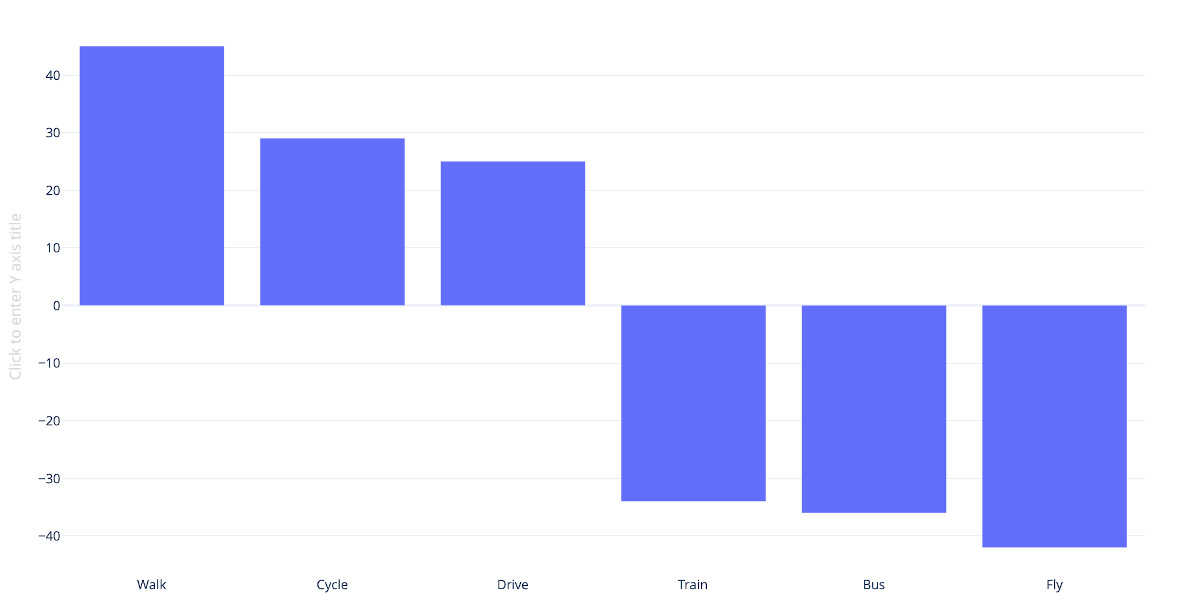
The survey found 45% of respondents expected to walk more, 29% expected to cycle more and 25% expected to drive their car more in the post-Covid future than they did before the pandemic.
However, in stark contrast, 42% anticipated using aeroplanes less, 36% using buses less and 34% using trains less. The most common reasons given for using public transport less in the future were the possibility of getting infections from other passengers, lack of cleanliness/hygiene on board and overcrowding.
“Although part of it may be due to current overexposure to discussions about infective diseases and so be transient, such lack of confidence in public transport is not good news for the industry,” said Dr Achille Fonzone, associate professor of transport analysis and planning at Edinburgh Napier. “It is not good news for Scotland either, considering the importance of public transport to ensure an equitable and sustainable mobility.”
My highlighting, and I would agree. If Coronavirus is rare and not resurgent, in a year or two the concerns might be a distant memory. But people may have change their habits and life style and be hard to win back - indeed travel as a whole may be reduced. Some data on that too
In other findings, over half of workers (54%) expect to work from home more in the post-Covid future than they did before the pandemic and 64% stated that they will use technology more to communicate with colleagues, customers or clients. Over half (52%) of respondents expect to use technology to communicate with family and friends more.
When asked about their future shopping habits, 45% expected to do more online non-grocery shopping in the future and 36% anticipate using home delivery for supermarket shopping more.
When asked about their future shopping habits, 45% expected to do more online non-grocery shopping in the future and 36% anticipate using home delivery for supermarket shopping more.
| Re: Research on how people expect to travel in the future Posted by rogerw at 17:26, 29th April 2021 | |
I don't think it helped that the Government was giving out a strong message not to use public transport or even, in one case, suggesting that it was dangerous to do so.
| Re: Research on how people expect to travel in the future Posted by grahame at 06:10, 8th June 2021 | |
https://www.bbc.co.uk/news/business-57339105
The five-day office week could become the norm again within two years, the Centre for Cities think tank has told the BBC.
A blend of home and office work is expected to be popular while the UK recovers from the pandemic.
But some analysts then anticipate a shift back to pre-Covid working patterns for many.
A blend of home and office work is expected to be popular while the UK recovers from the pandemic.
But some analysts then anticipate a shift back to pre-Covid working patterns for many.
Shows how varied opinions are ... expectation from a GWR presentation last week is that an average full time working person in an office will drop from 4.4 round trips between home to 2.26 (I think that was the figure) for the future.
| Re: Research on how people expect to travel in the future Posted by Lee at 10:44, 8th June 2021 | |
https://www.bbc.co.uk/news/business-57339105
Shows how varied opinions are ... expectation from a GWR presentation last week is that an average full time working person in an office will drop from 4.4 round trips between home to 2.26 (I think that was the figure) for the future.
The five-day office week could become the norm again within two years, the Centre for Cities think tank has told the BBC.
A blend of home and office work is expected to be popular while the UK recovers from the pandemic.
But some analysts then anticipate a shift back to pre-Covid working patterns for many.
A blend of home and office work is expected to be popular while the UK recovers from the pandemic.
But some analysts then anticipate a shift back to pre-Covid working patterns for many.
Shows how varied opinions are ... expectation from a GWR presentation last week is that an average full time working person in an office will drop from 4.4 round trips between home to 2.26 (I think that was the figure) for the future.
The Centre for Cities describes itself as "the leading think tank dedicated to improving the economies of the UK's largest cities and towns." - so it does have rather a vested interest in making its prediction come true.
| Re: Research on how people expect to travel in the future Posted by broadgage at 14:16, 7th September 2021 | |
I agree that the "center for cities" have a vested interest, but would also argue that GWR have a vested interest in the opposite direction. Forecasting an approximate halving of commuting avoids undue attention being given to the failed IET project.
"We don't really need that many trains with the reduction in commuting"
"5 car units are fine with the reduced passenger numbers"
"Super fasts no longer needed"
And of course if commuter numbers DO return to nearly pre covid levels they can say
"This is totally unexpected and could not have been foreseen"
" Increasing train lengths (to those originally promised) is more complex than is realised, and will take time.
" Studies are underway as to how best to meet increased demand"
| Re: Research on how people expect to travel in the future Posted by TaplowGreen at 21:25, 7th September 2021 | |
I agree that the "center for cities" have a vested interest, but would also argue that GWR have a vested interest in the opposite direction. Forecasting an approximate halving of commuting avoids undue attention being given to the failed IET project.
"We don't really need that many trains with the reduction in commuting"
"5 car units are fine with the reduced passenger numbers"
"Super fasts no longer needed"
And of course if commuter numbers DO return to nearly pre covid levels they can say
"This is totally unexpected and could not have been foreseen"
" Increasing train lengths (to those originally promised) is more complex than is realised, and will take time.
" Studies are underway as to how best to meet increased demand"
I don't know why, but sometimes I get this feeling that you don't like IETs?
| Re: Research on how people expect to travel in the future Posted by jamestheredengine at 22:55, 7th September 2021 | |
https://www.bbc.co.uk/news/business-57339105
Shows how varied opinions are ... expectation from a GWR presentation last week is that an average full time working person in an office will drop from 4.4 round trips between home to 2.26 (I think that was the figure) for the future.
In my personal case it'll reduce to about a round trip every four months. Vastly outweighed by leisure travel on a personal level. Really quite weird in retrospect that a year and a half ago I couldn't imagine anything other than going into an office five days a week.The five-day office week could become the norm again within two years, the Centre for Cities think tank has told the BBC.
A blend of home and office work is expected to be popular while the UK recovers from the pandemic.
But some analysts then anticipate a shift back to pre-Covid working patterns for many.
A blend of home and office work is expected to be popular while the UK recovers from the pandemic.
But some analysts then anticipate a shift back to pre-Covid working patterns for many.
Shows how varied opinions are ... expectation from a GWR presentation last week is that an average full time working person in an office will drop from 4.4 round trips between home to 2.26 (I think that was the figure) for the future.
| Re: Research on how people expect to travel in the future Posted by broadgage at 02:30, 8th September 2021 | |
I don't know why, but sometimes I get this feeling that you don't like IETs?
No I do not. They represent a considerable backward step as regards passenger facilities and comfort, as discussed elsewhere in these forums.
And now this is compounded by a significant lack of availability whether due to cracks or other faults. Years ago I stated that a single 5 car unit was unsuited to busy trains to/from London. We were told that "all trains to/from London that need to be full length, will be" And what has happened ? 5 car units full and standing on busy services.
Supporters will still claim that they are not bad really and that train length is now less important. But by any common sense standards the project has been a failure.
Timely introduction ? FAIL delivered late.
Japanese reliability ? FAIL, not just the cracks but also overheating, coupling faults, and general poor build quality.
Seating comfort ? FAIL, no doubt some people like them but the general view is of a backward step.
Luggage space ? FAIL, surfboards banned, cycle spaces insufficient and badly designed, as discussed elsewhere.
Catering ? FAIL, none of the promises made about the trolley have been achieved, see the catering thread for details.
Train length ? FAIL, years after introduction short formations are frequent, and that with a reduced timetable.
Whilst they might eventually come right, for how many years are we to wait ? "jam tomorrow" has become "jam in a few years" maybe.
