







| Some good examples of how they do it in Germany Posted by grahame at 12:40, 17th May 2026 |     |
I passed through Muenster (Westphalia) this (Sunday) morning ... and it struck me just how joined up and information and facilities rich the public transport is in this city - which (by population) is perhaps 20% larger that Swindon, just over two times the size of Bath. Readers are welcome to make comparisons to they find in Bath, or Swindon, or Bristol or Salisbury or on the public transport between them. I am going to focus here on good things.
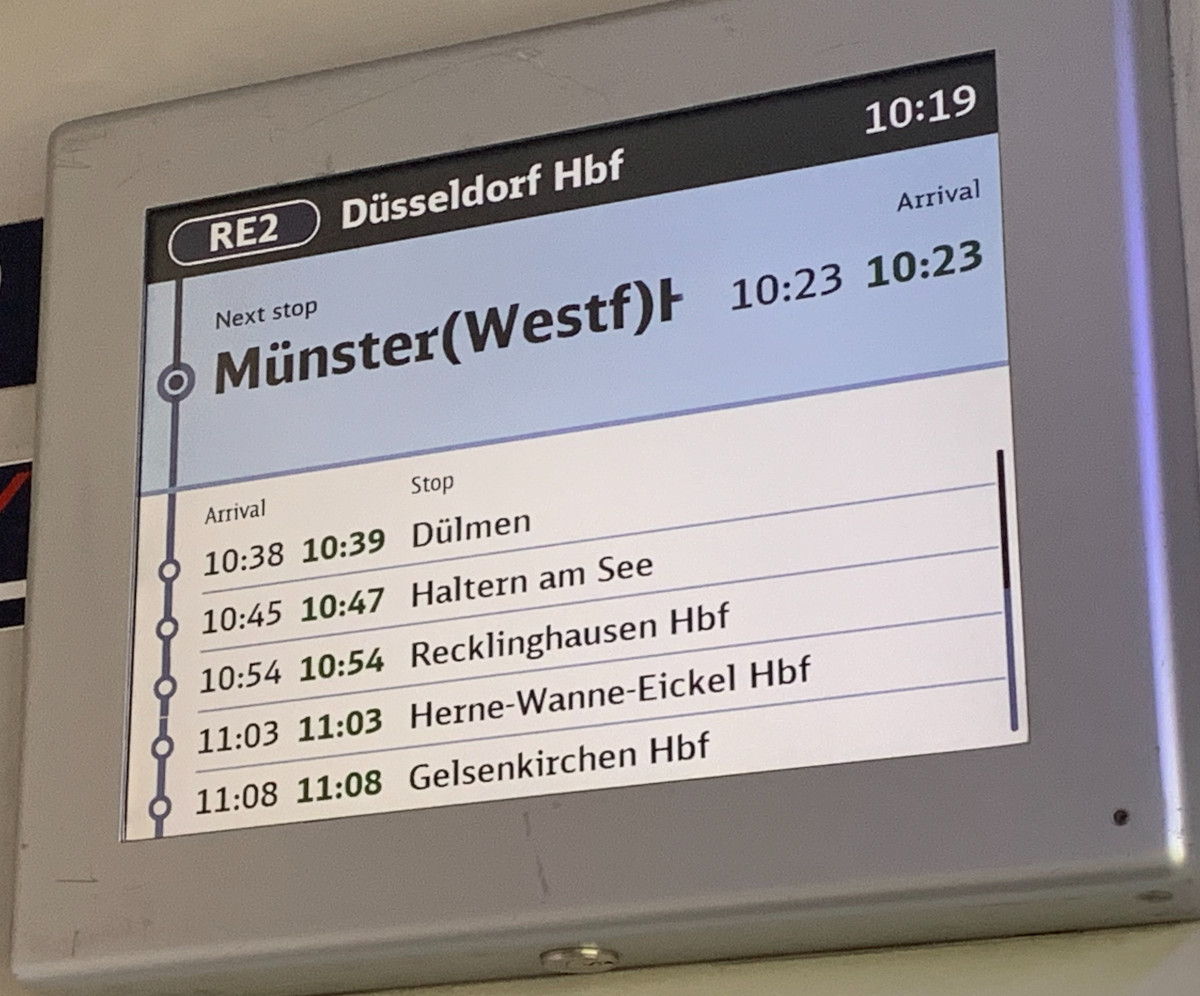
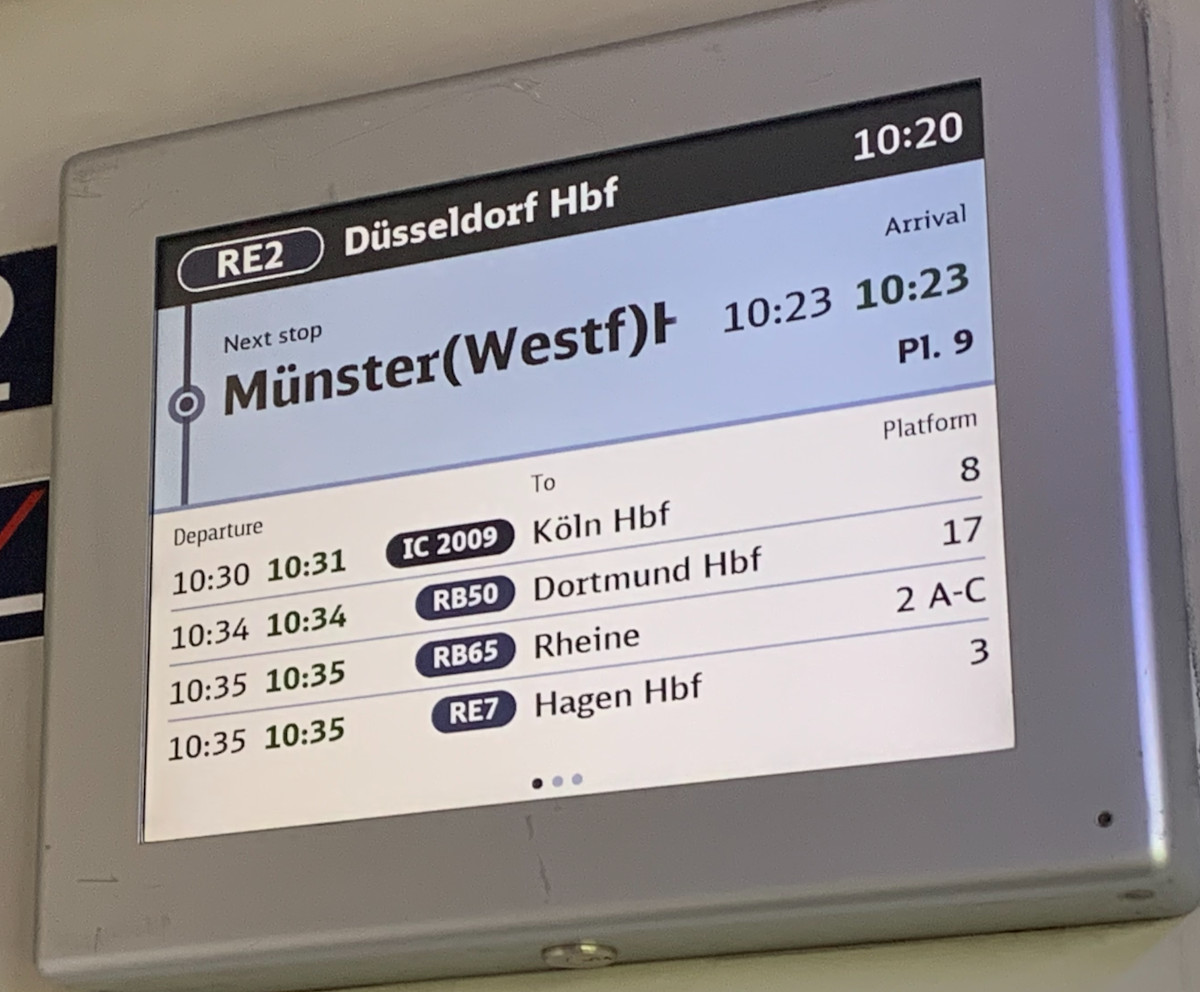
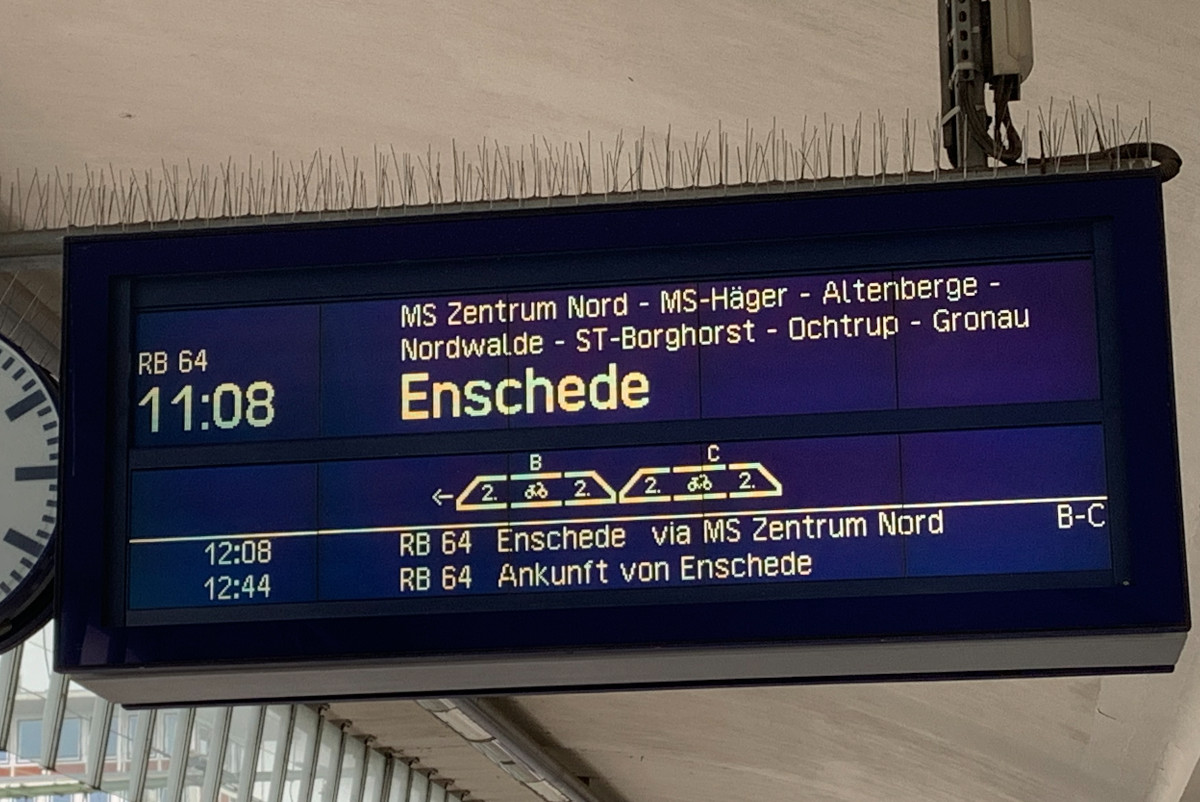
On train displays telling you more that just the next station - following stations, where to change and to which platform for ongoing services, and where the various regional and local buses are to be found. The displays alternating between German and English.
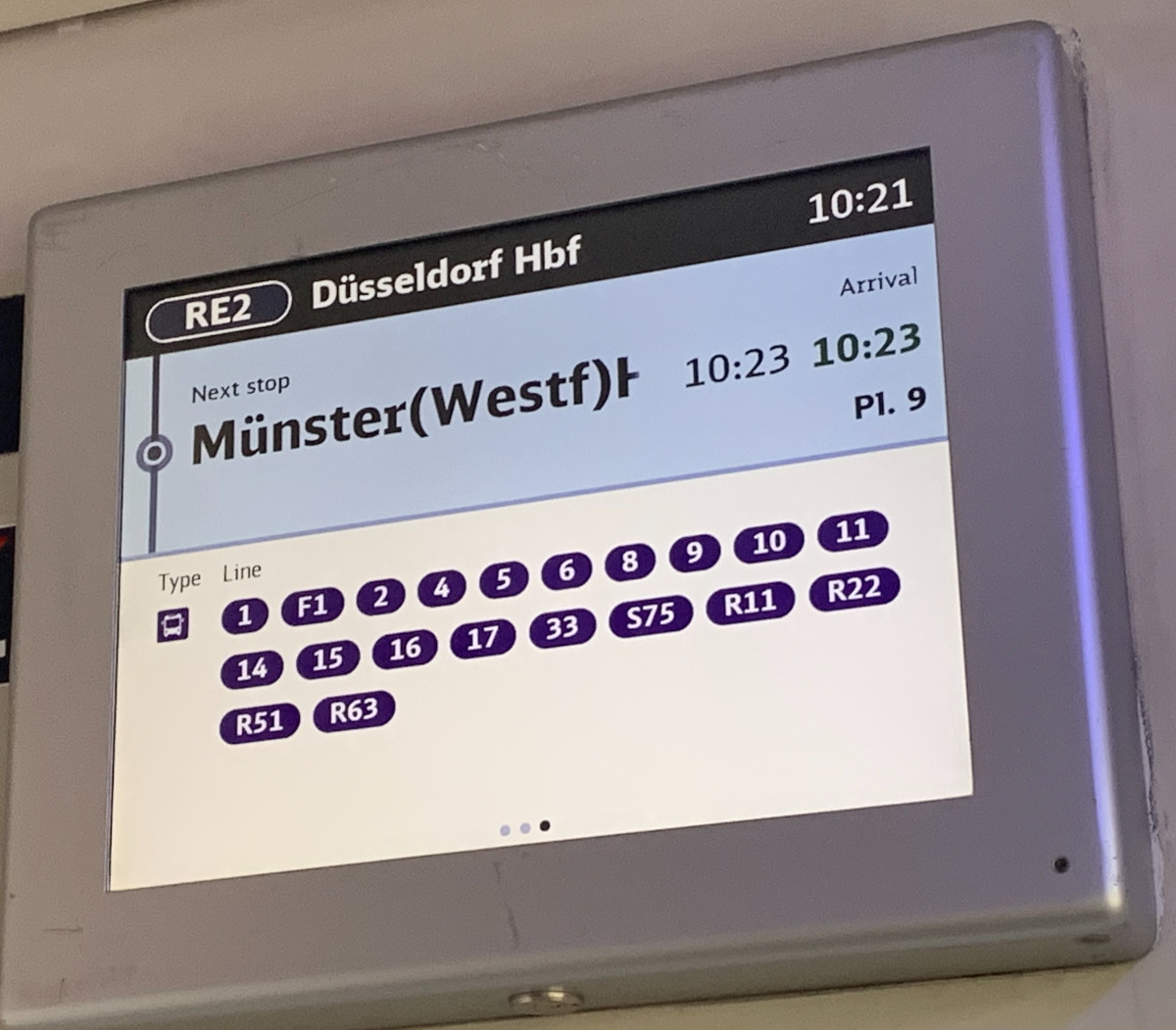
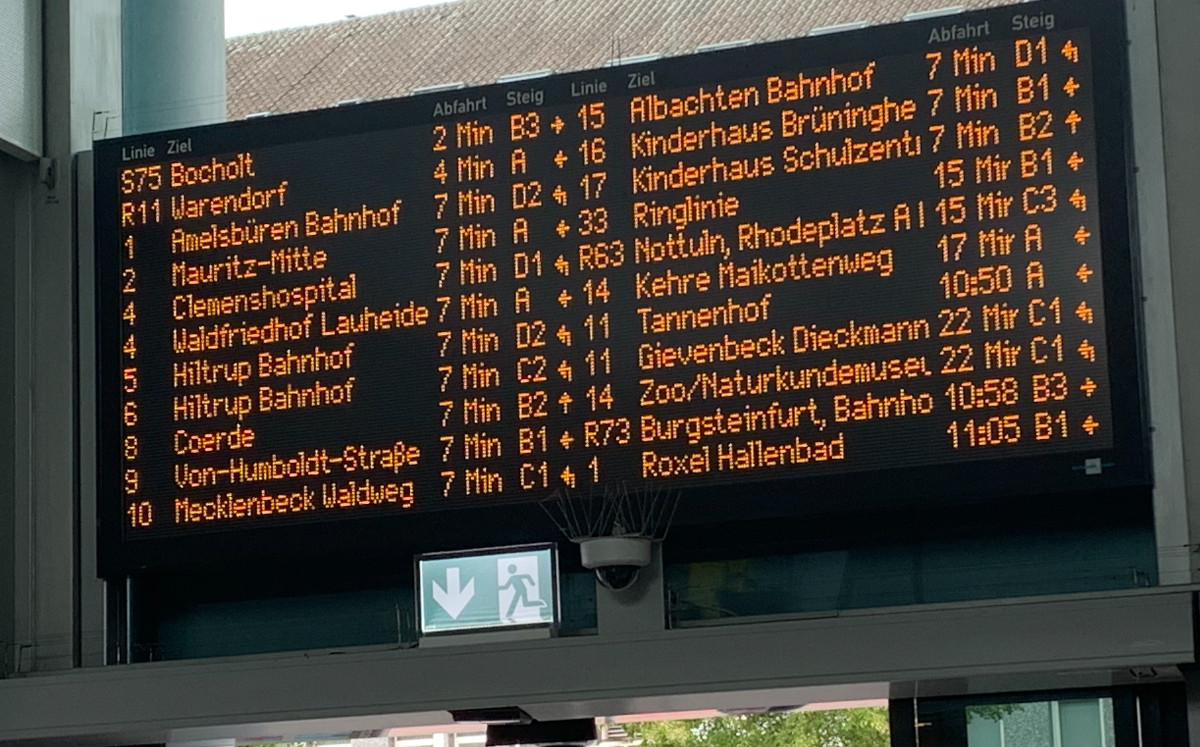
The railway station has the buses right outside, and as you come off the trains there are directions to the buses. And as you come off the buses, there are directioons to the trains
For the newcomer, there are maps of the city centre, city centre transport, urban area transport, and transport beyond.
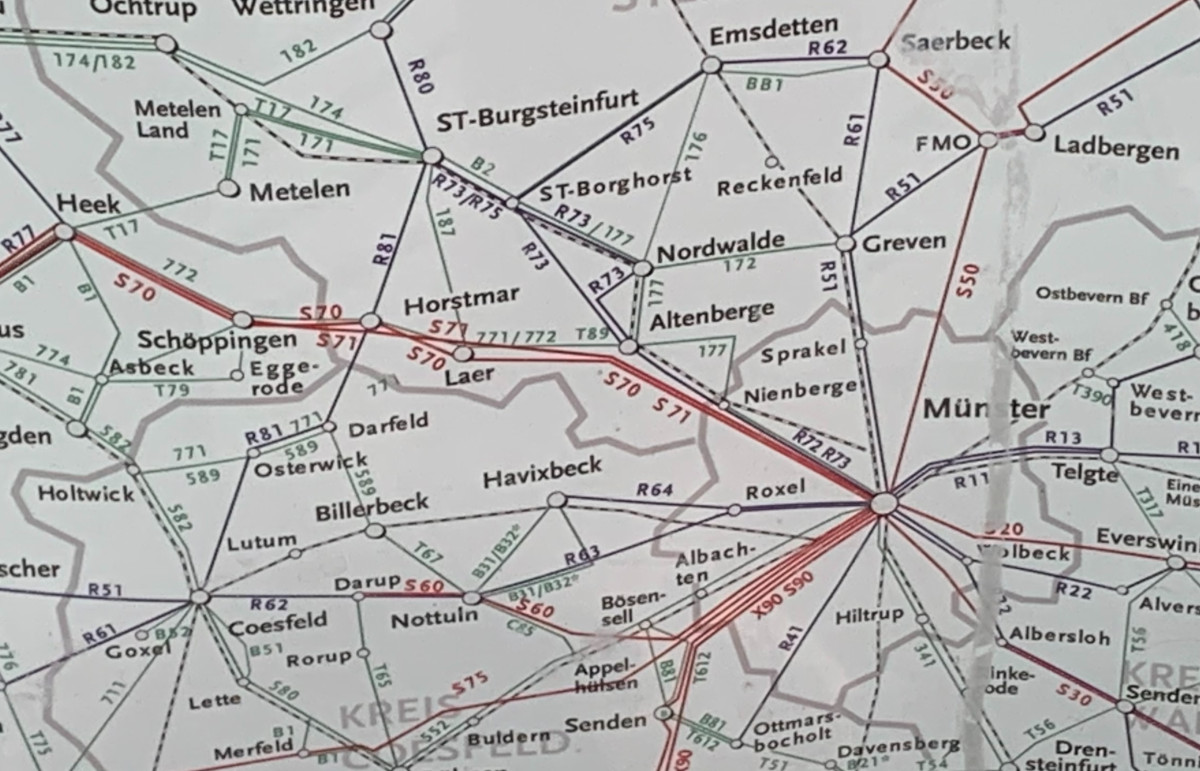
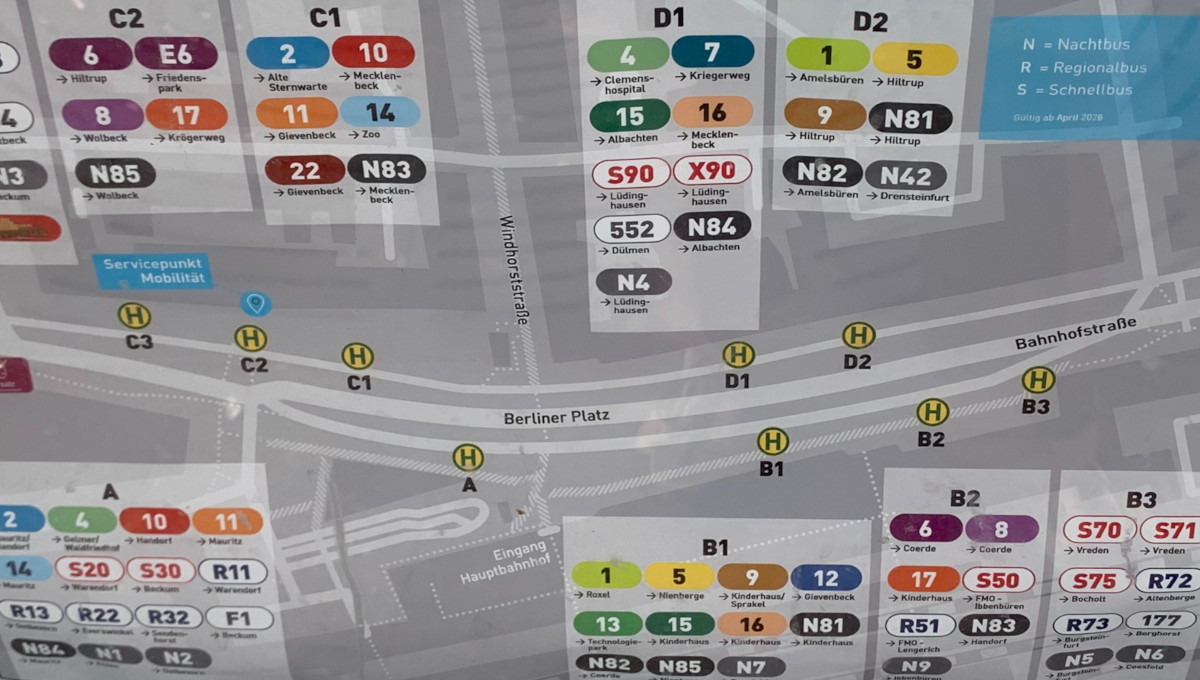
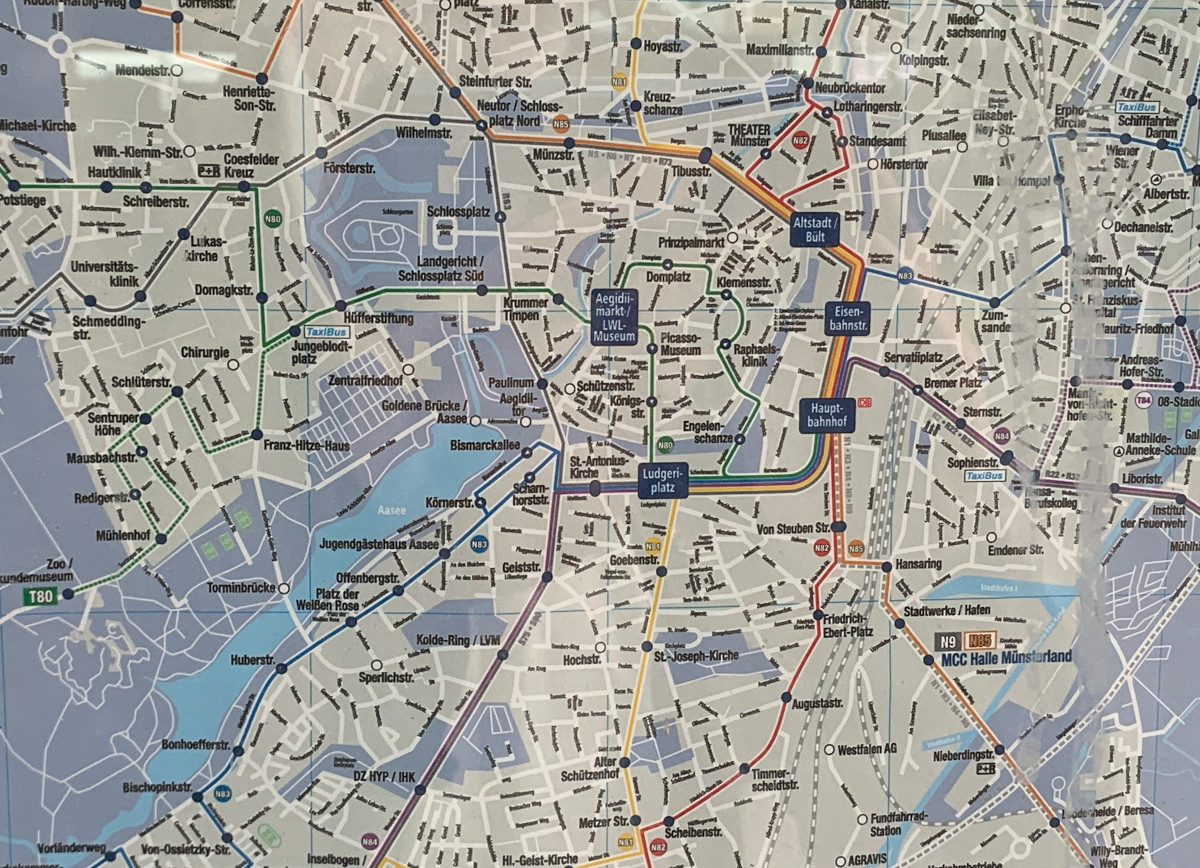
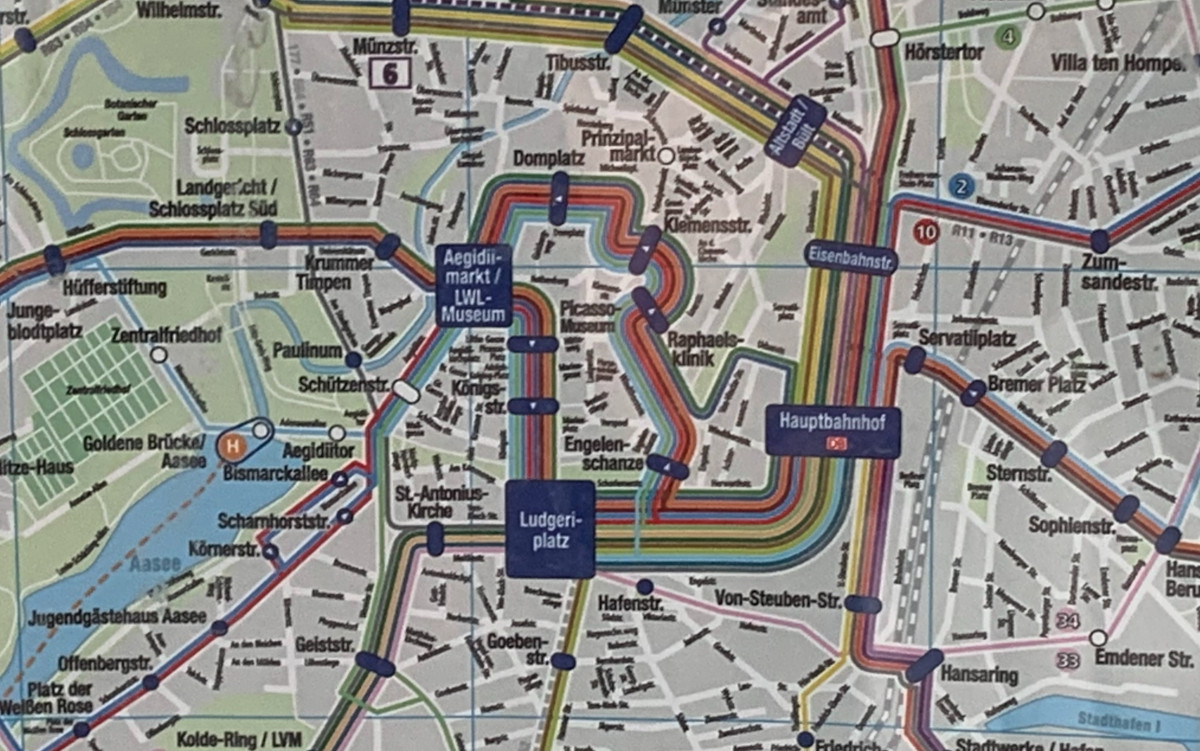
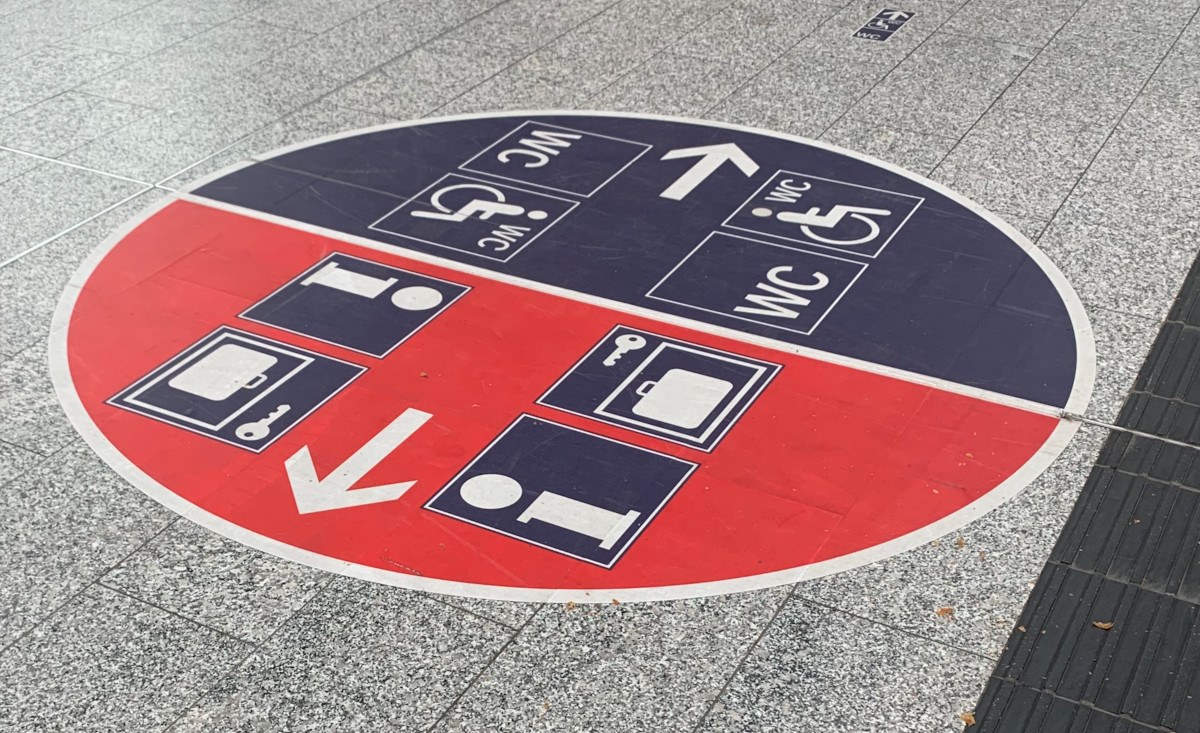
Dirctions to the various facilities too
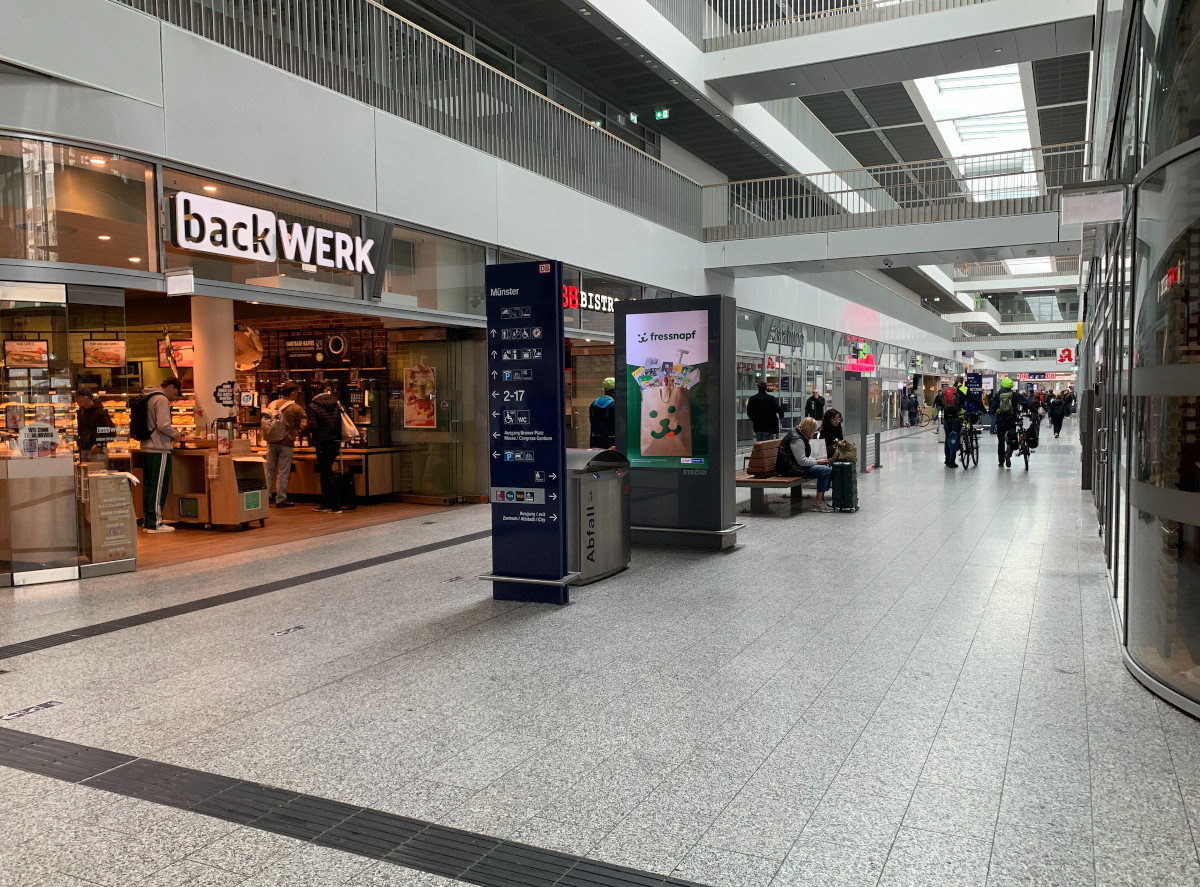
A modern, airy, friendly feel - plenty of light, and automatic doors that keep the wind out and the warm air in.
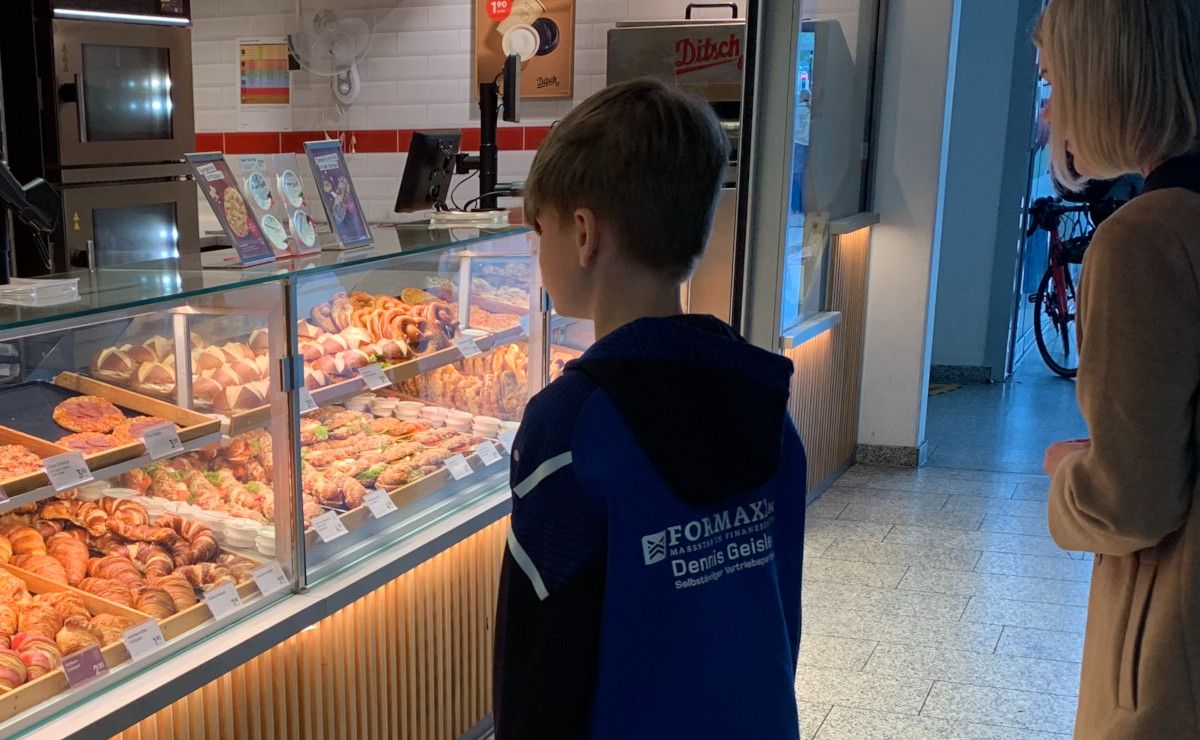
The selection of cafes is wide and the products copious, attractive and reasonable priced, with smiling staff who are happy so serve with a smile.

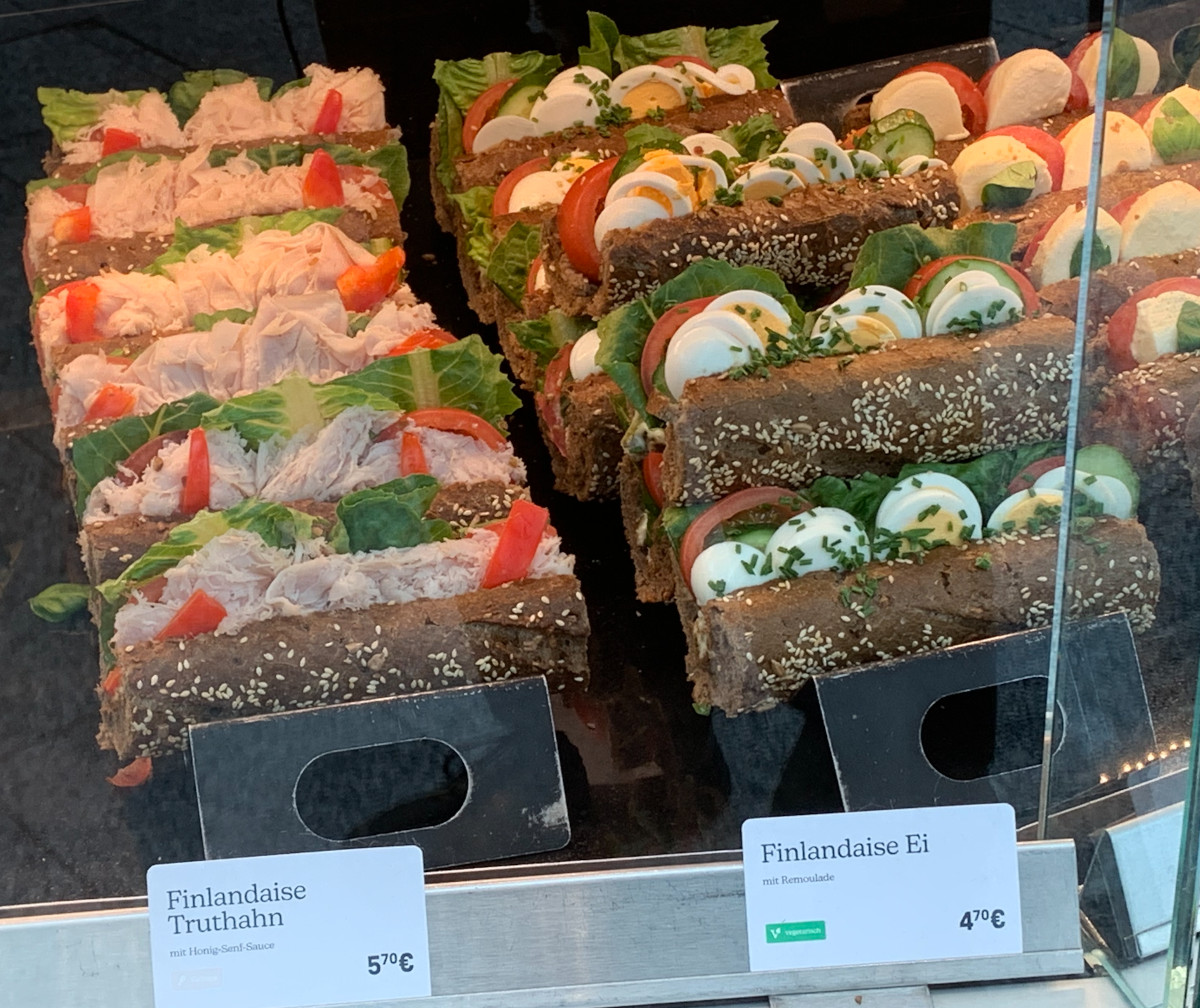
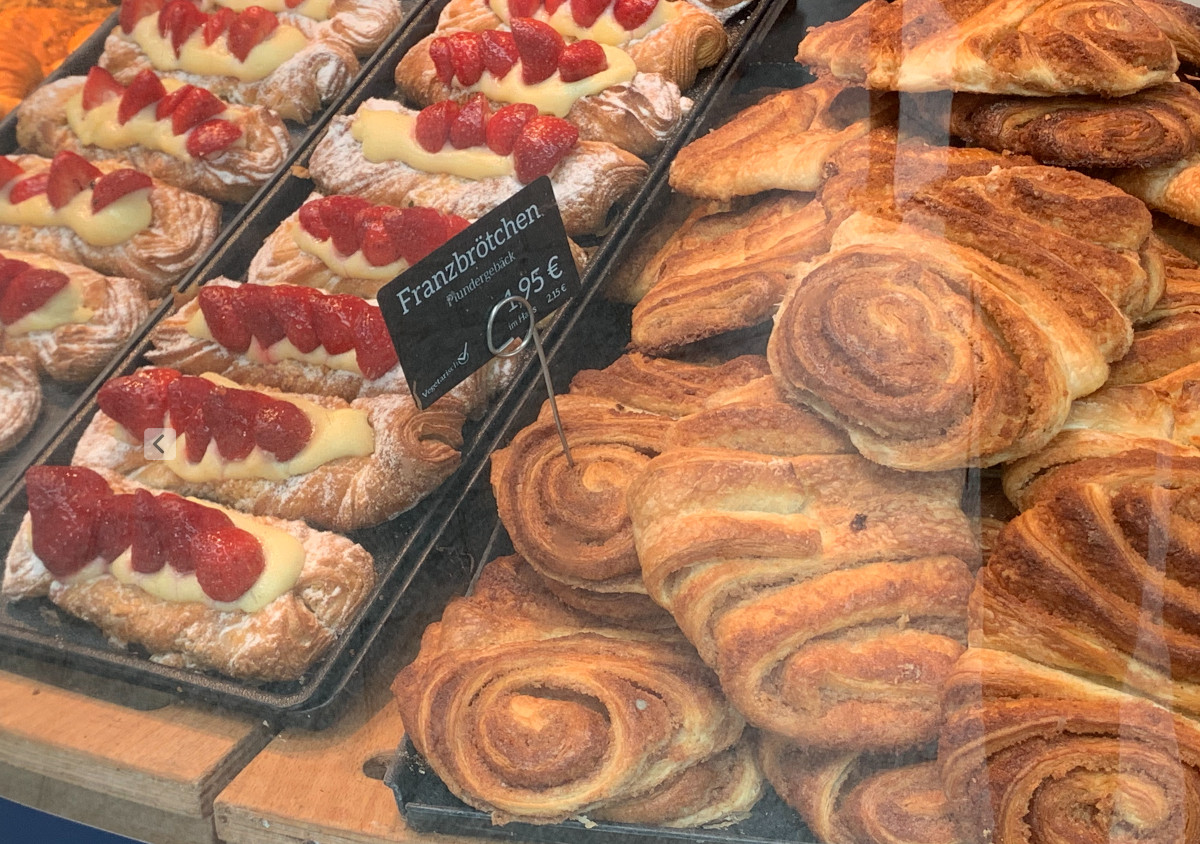
There is a wider range of shops / outlets too - a veritable shopping mall where you'll be temped to make far more than just emergency purchase whilst you wince at station prices.
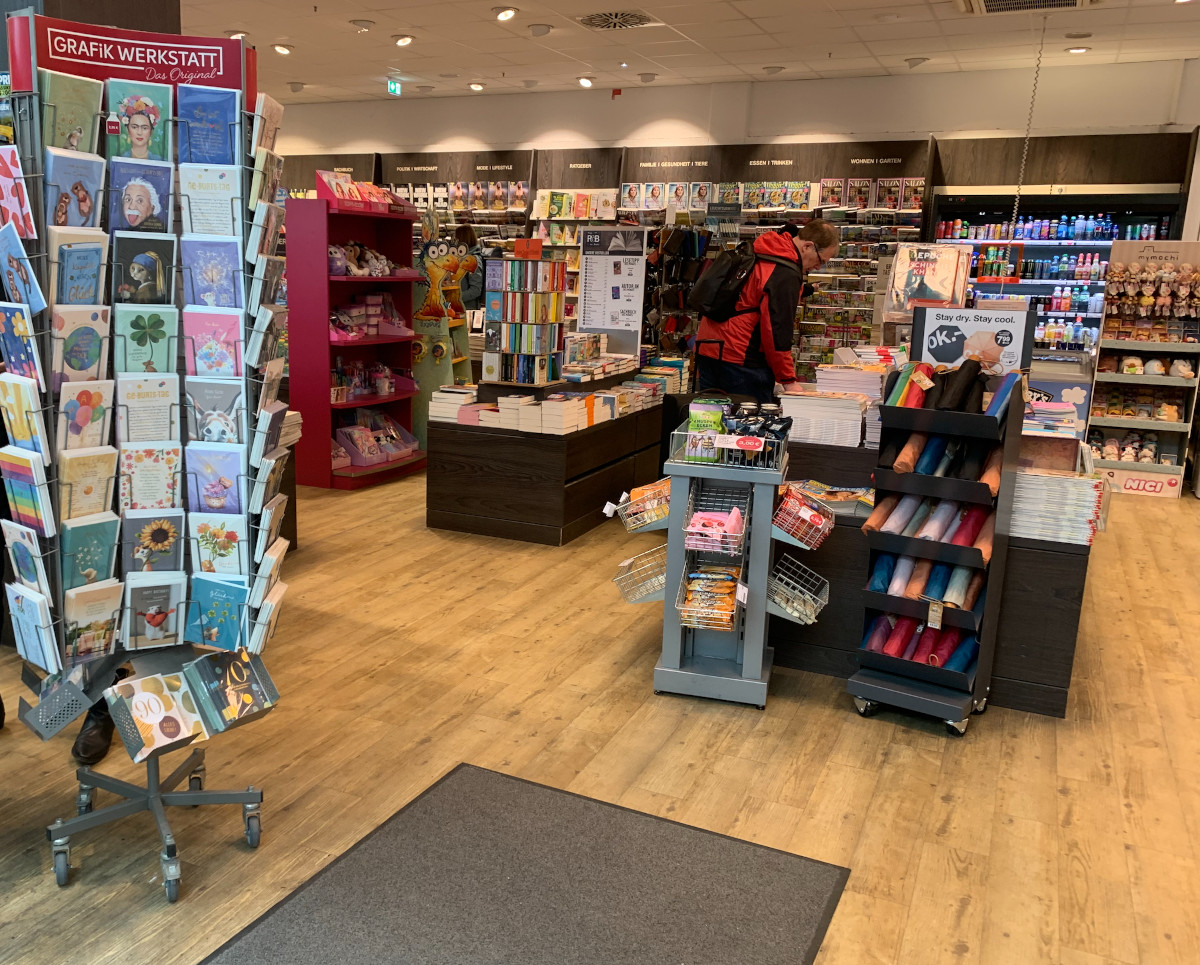
For those who want them, McDonalds and KFC are right there in the station
Boards along the platorms tell you where to stand - where the various parts of the train will be in clearly lettered zones.
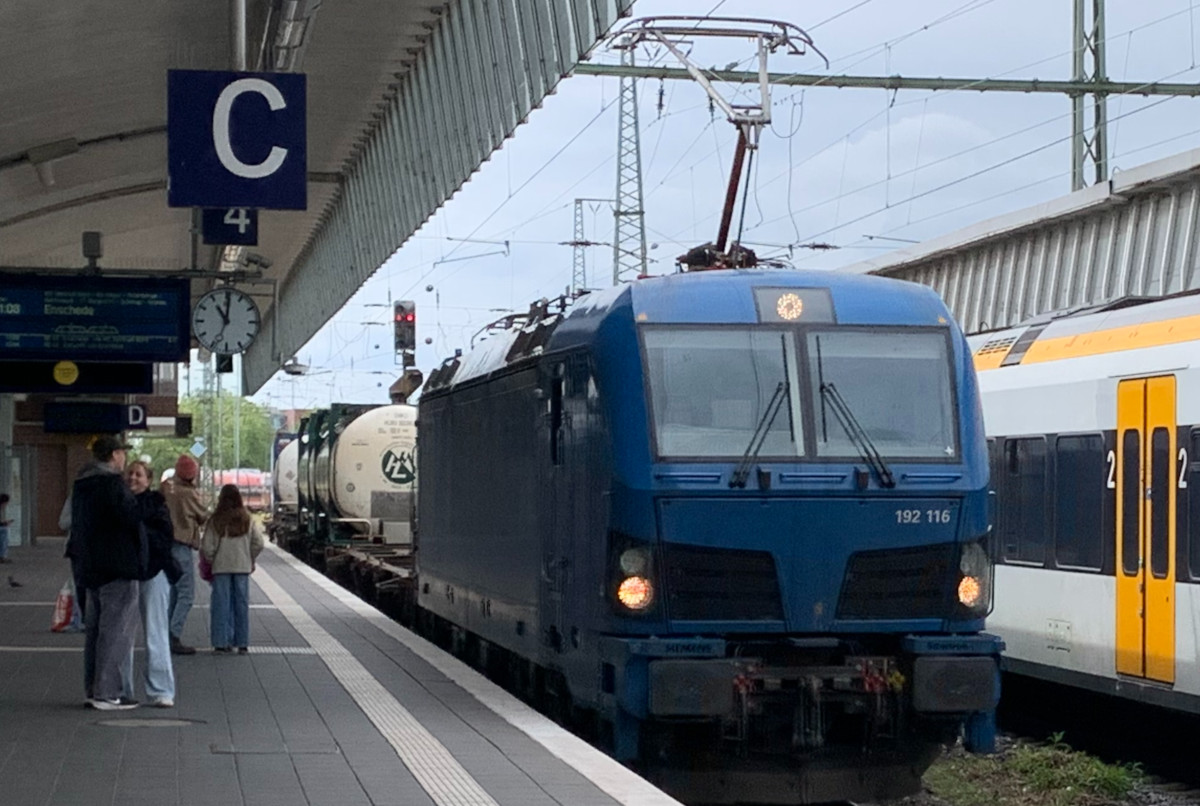
The trains are modern, attractive, and in lots of colours and operators.
Most trains electric, and running clock face at the same time in each hour. Freight services also sharing the tracks and also electric hauled.
Plenty of bicycle space and passenger space on a six carrige train, and useable cycle clips
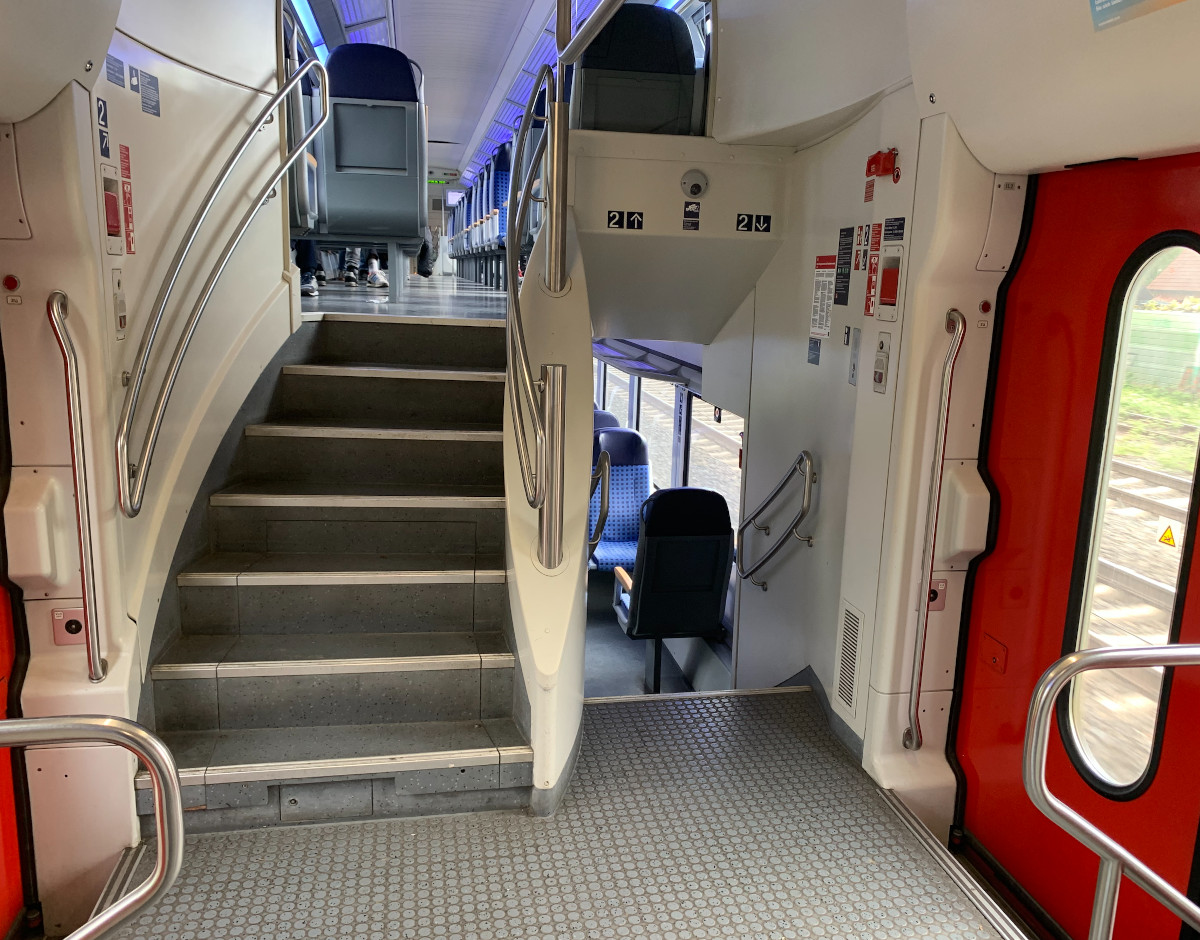
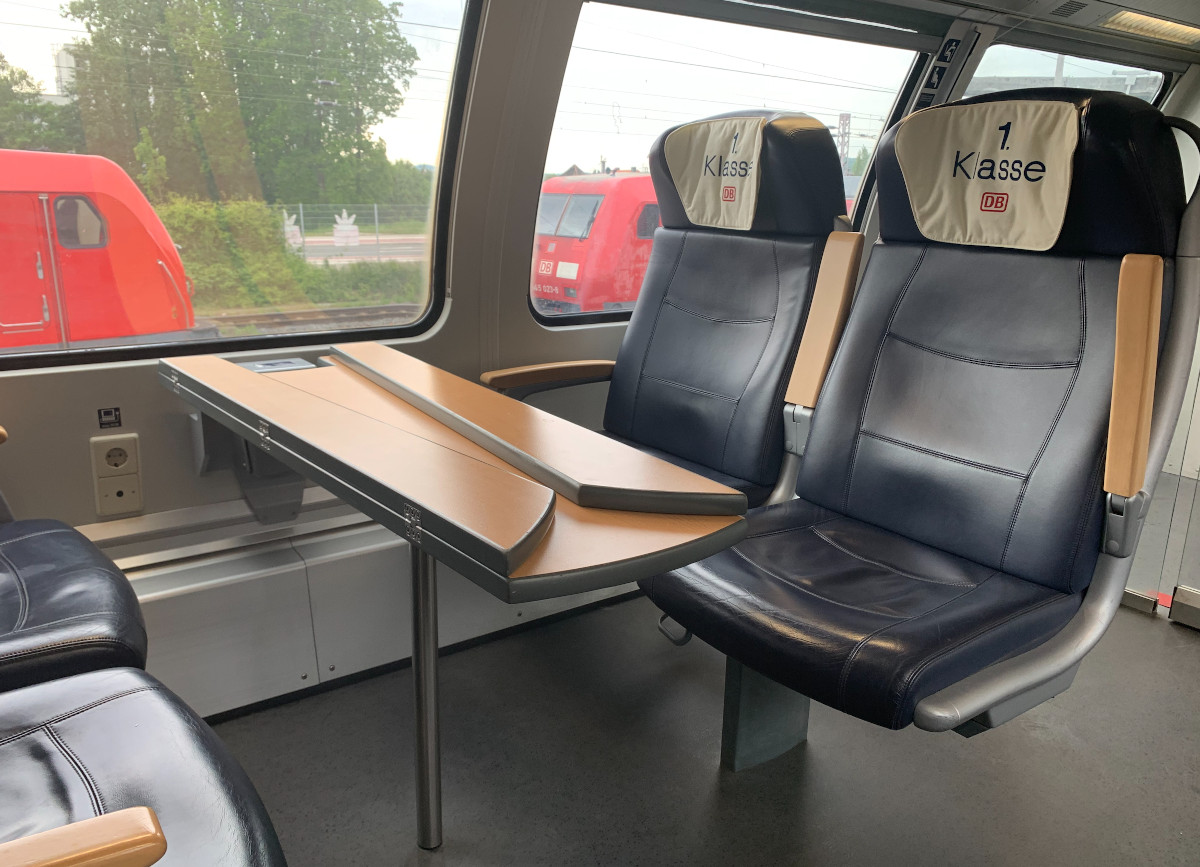
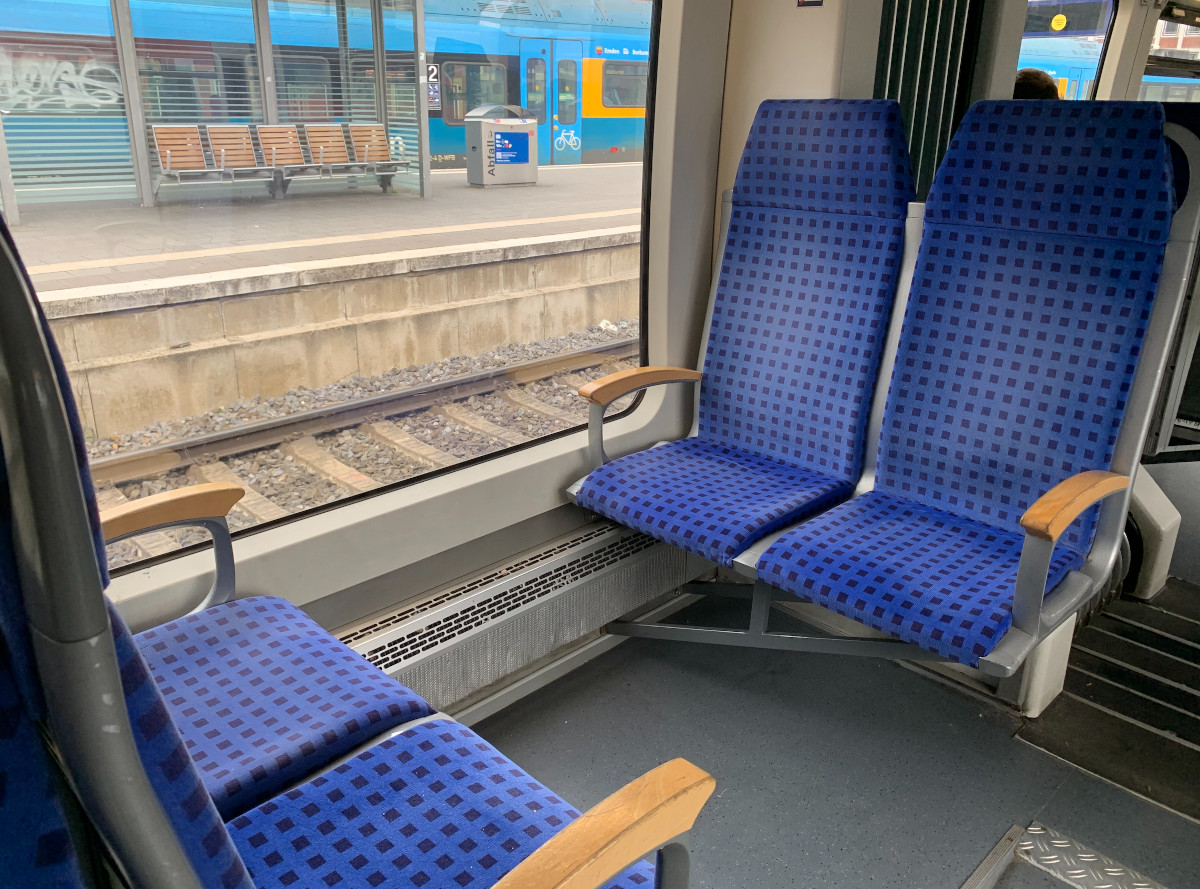
Comfortable seats on longer distance trains
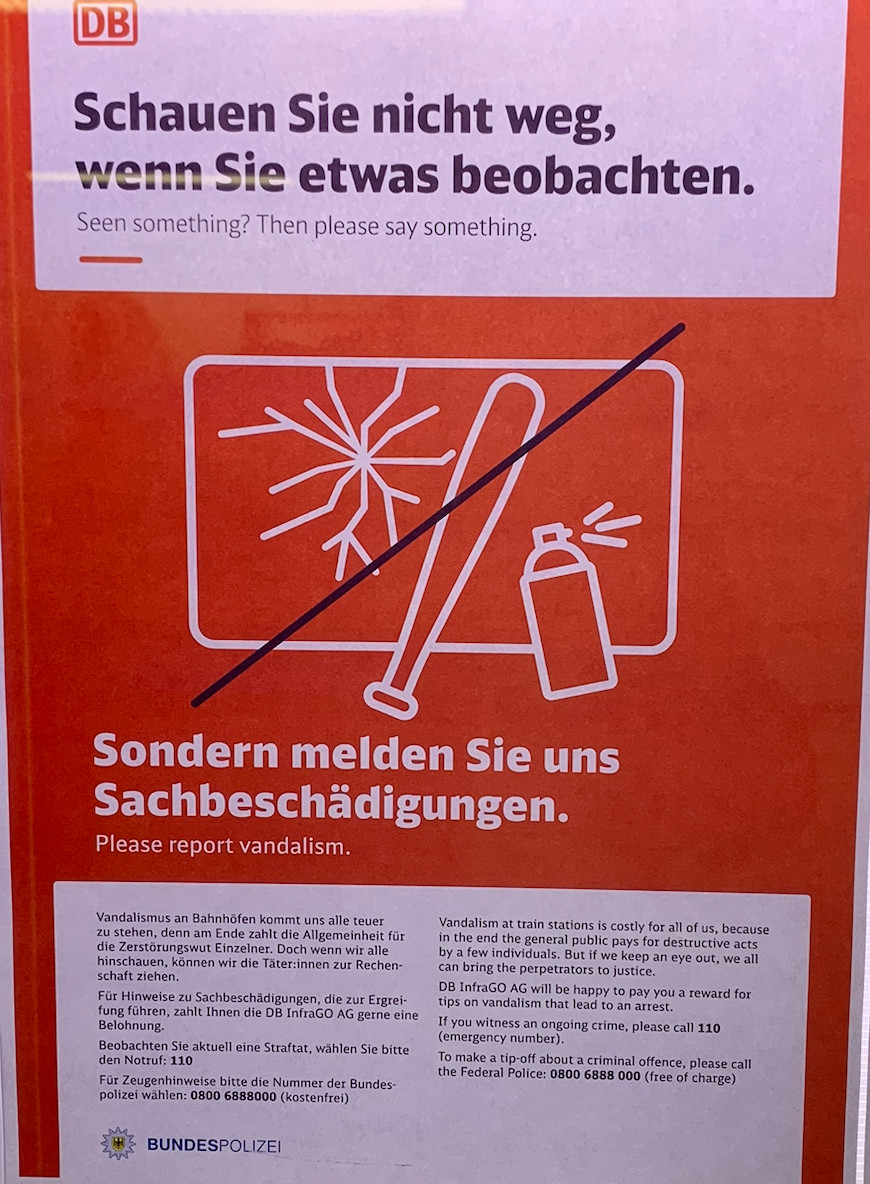
"See it, say it, sorted" with good explanation of what and how to report
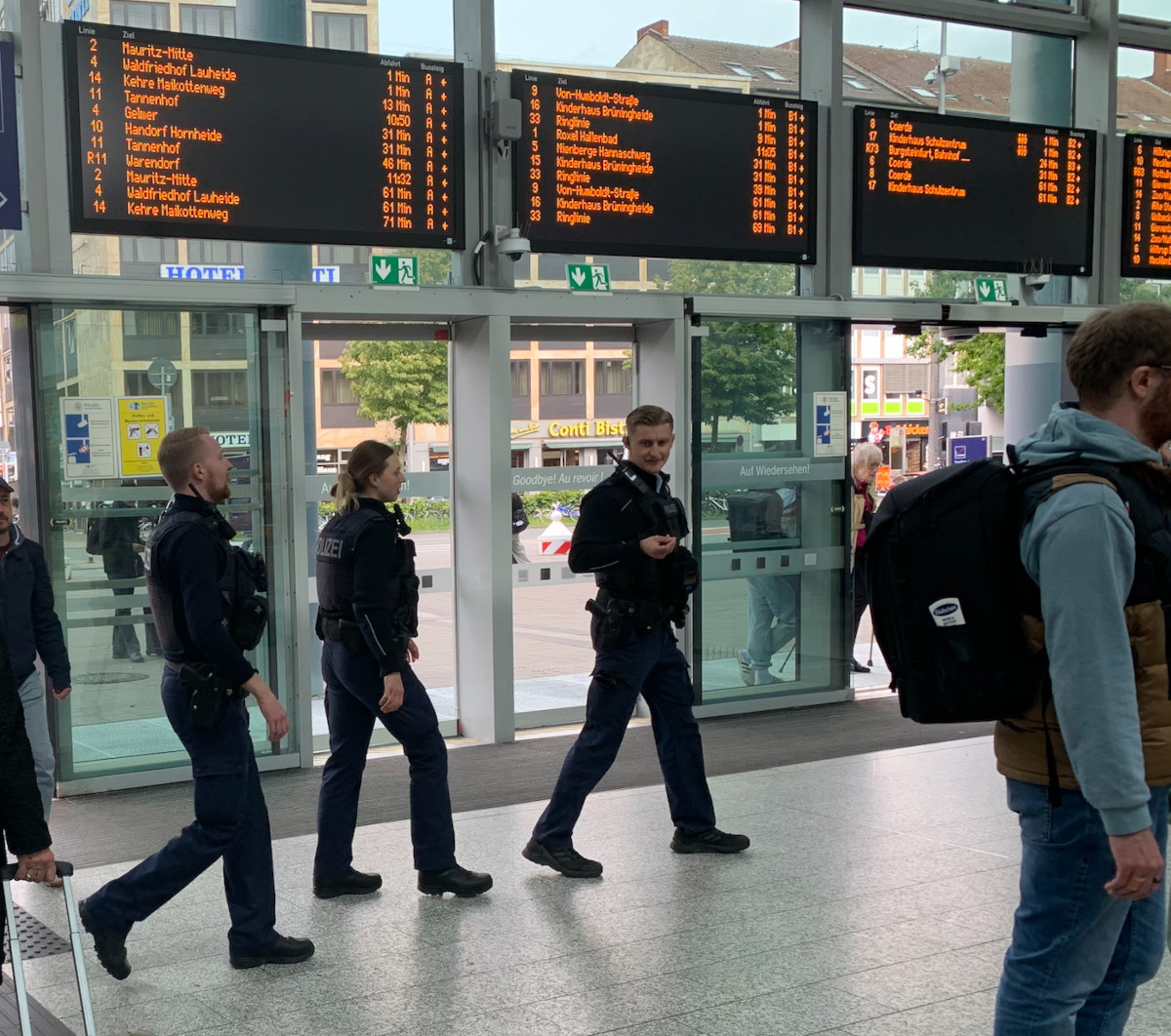
Security to make you feel safe
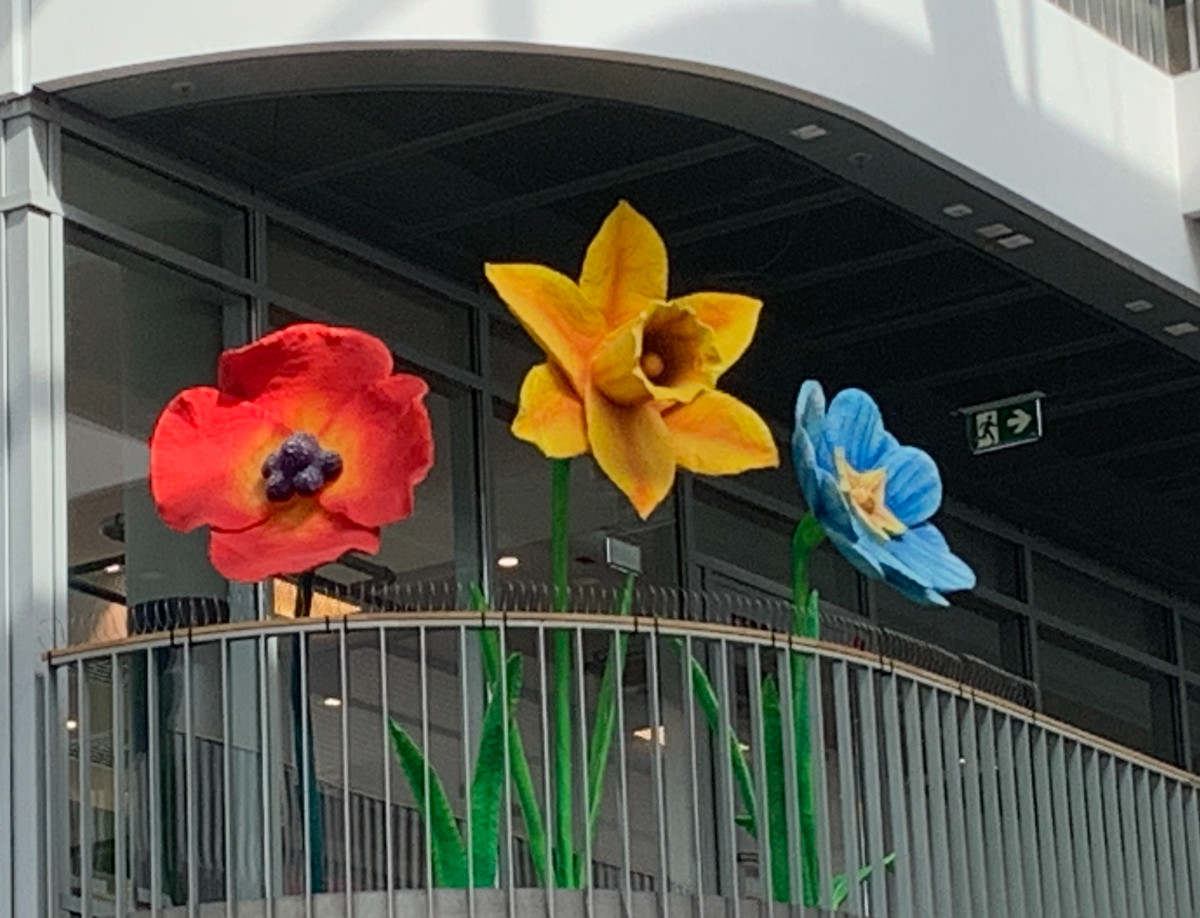
Discreet Artwork
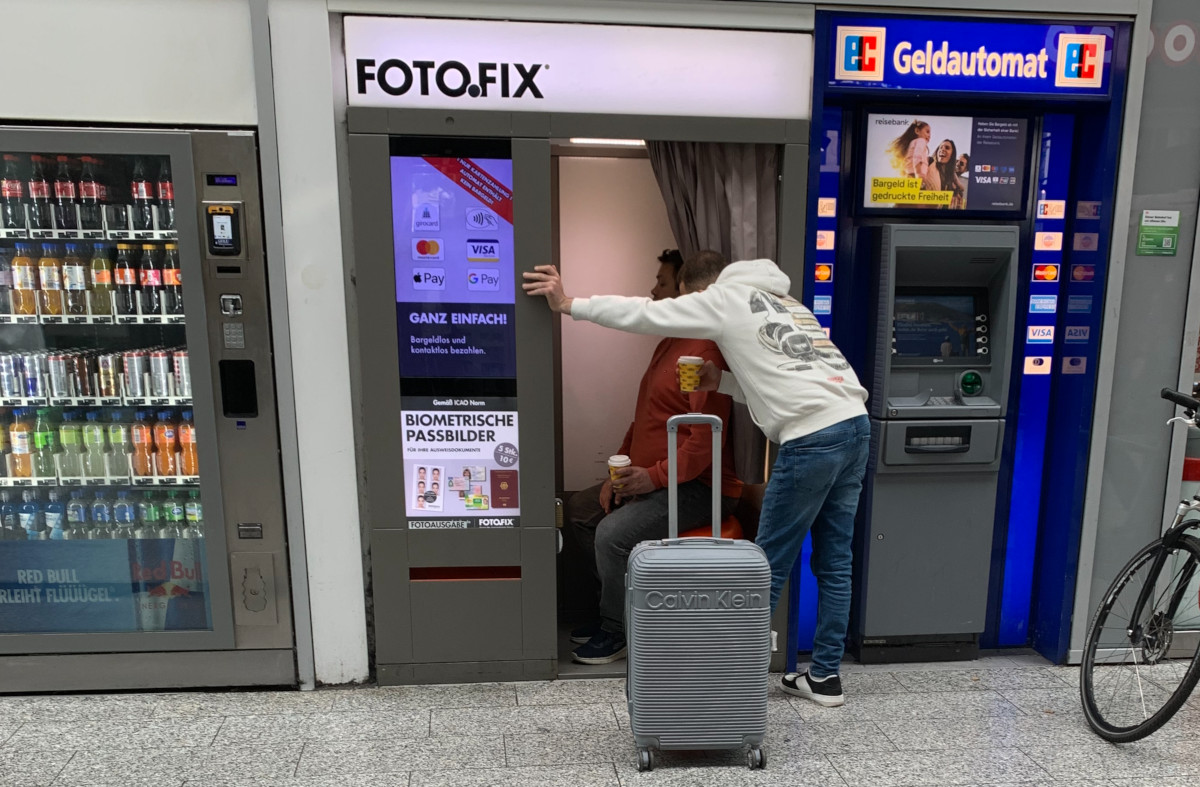
Automated facilites
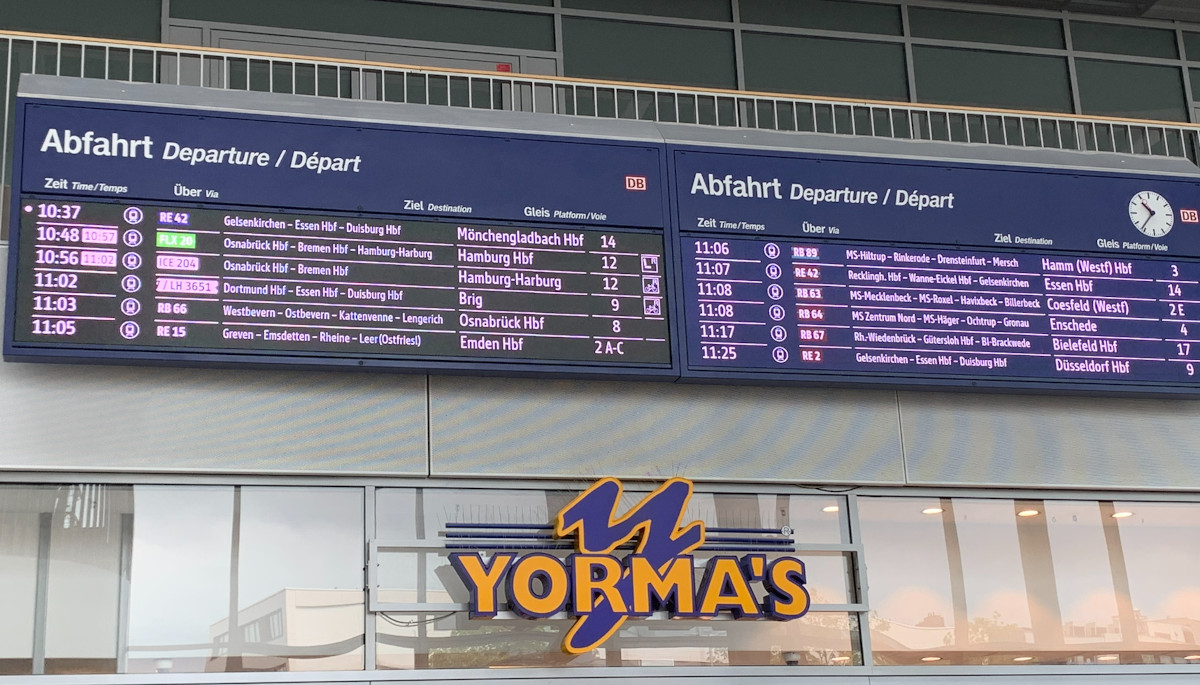
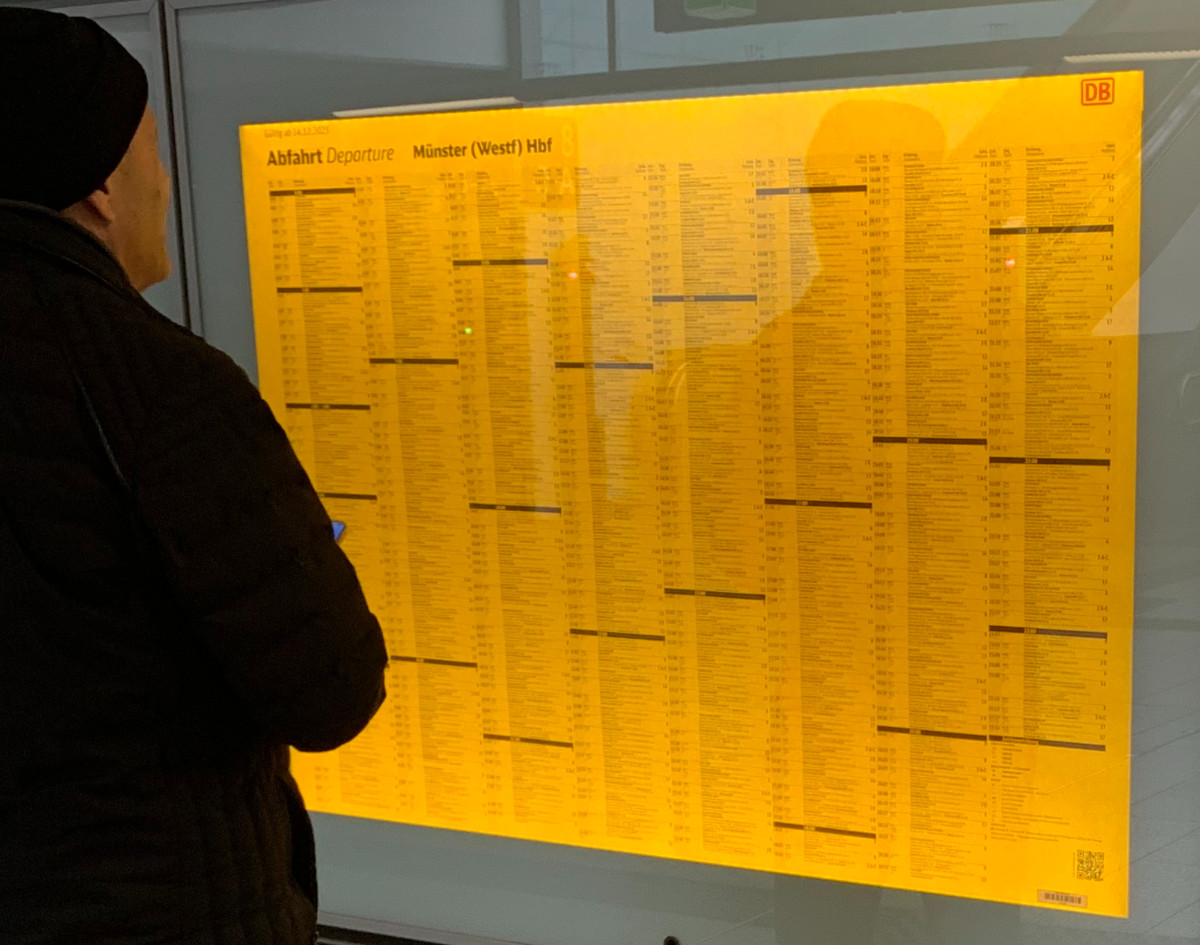
Departure tables / details applying daily, notifying platform numbers way in advance
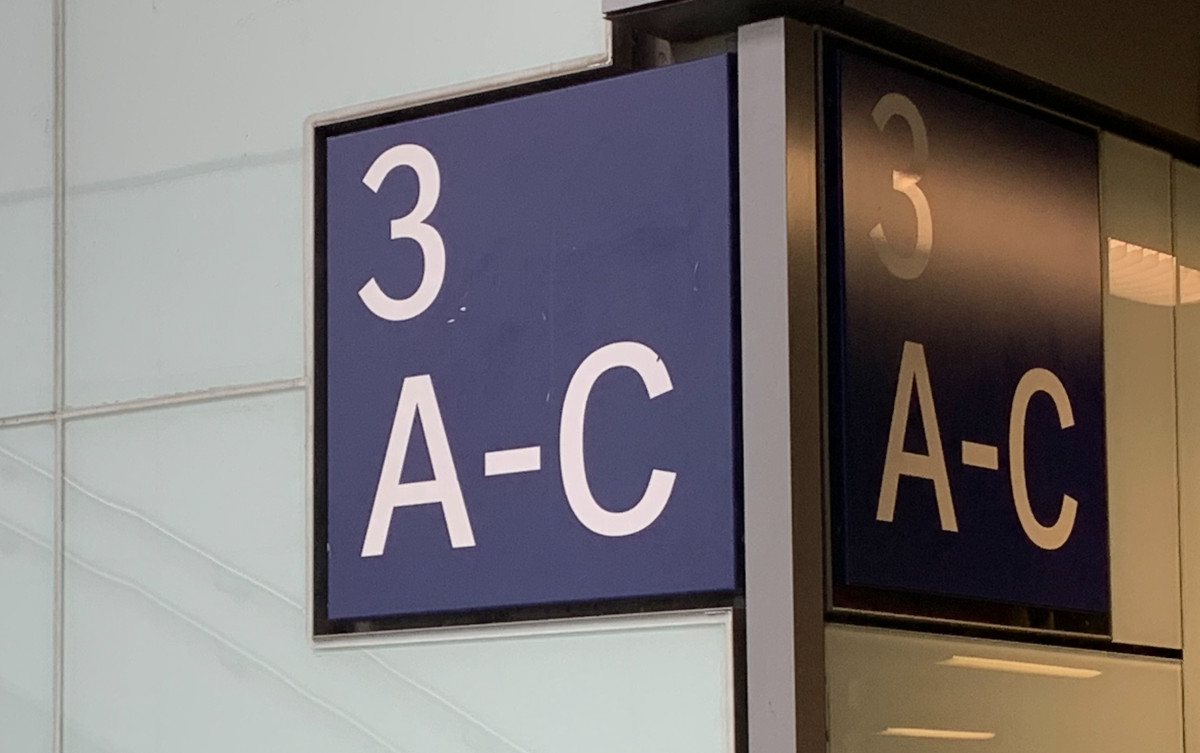
Platform sections clearly indicated and on-plaform displays helping you find the right place in the train
Yes - I have seen trains so overcrowded I could not get on. Cancelled services. Delayed services where the initial delay creeps upward from a few minutes to quarter of an hour. Loos, doors, escalators out of action. Trains diverted from the main station so giving a need to make a new, later and more complex connection, and in train displays that are clearly out of sync. I am not suggesting that the German system is perfect - far from it, but there are lessons we could learn. Passenger friendly lessons that, perhaps, would encourge people to use public transport so much more and replay the investment in providing and maintaining them many times over.
| Re: Some good examples of how they do it in Germany Posted by eightonedee at 14:23, 17th May 2026 | |
From my own recent travels in Germany, I would say that the two things that really set an example that GBR could learn from are the train information at stations/on trains and (but not in all main stations) the extended hours and variety of catering and retail outlets.
However, signage for getting around stations internally was in my experience (based on experience at Aachen, Osnabruck, Hannover, Hamburg HBF and Lubeck) patchy or poor. In particular, Osnabruck, with its complex two level structure for a station of its size was apparently lacking in simple signage getting you between platforms on different levels and to the retail/main entrance.
It also has to be said that German stations do seem to be a magnet for drunks and down-and-outs, sadly.
What does strike you (and feel familiar) is the considerable difference in the ambience of stations. As in the UK, you have a mixture of tired stations that look like they need investment, grand old ones that either still "cut it" (e.g Lubeck) or look overdue a refresh (e.g Hamburg HBF), some that are just pleasant and adequate (e.g Aachen) or are modern, fresh and pleasant (e.g Hannover). But then, that matches what I've seen in Belgium, Netherlands and France too.
Another aspect I liked was the regional liveries applied to local trains, albeit that some are a little garish. My favourite (as you may gather from an earlier post) is the blue Schleswig-Holstein one, with a slogan proclaiming with regional pride "Schleswig-Holstein - der Echte Nordern" - "Schleswig-Holstein - the northern corner". Can we have something like that for our Thames Valley and South-west local trains, please GBR?
| Re: Some good examples of how they do it in Germany Posted by grahame at 06:13, 18th May 2026 | |
From my own recent travels in Germany, I would say that the two things that really set an example that GBR could learn from are the train information at stations/on trains and (but not in all main stations) the extended hours and variety of catering and retail outlets.
Indeed
However, signage for getting around stations internally was in my experience (based on experience at Aachen, Osnabruck, Hannover, Hamburg HBF and Lubeck) patchy or poor. In particular, Osnabruck, with its complex two level structure for a station of its size was apparently lacking in simple signage getting you between platforms on different levels and to the retail/main entrance.
As - Osnabruck! I know it well enough to ignore the direction signs. But thinking about it, last Tuesday taking cousins from Long Beach through there, they looked a bit "wondering" to put it mildly. Mind, it was the 4th change of the day. Hamburg HbF I similarly know, Lubeck I found easy enough.
Another aspect I liked was the regional liveries applied to local trains, albeit that some are a little garish. My favourite (as you may gather from an earlier post) is the blue Schleswig-Holstein one, with a slogan proclaiming with regional pride "Schleswig-Holstein - der Echte Nordern" - "Schleswig-Holstein - the northern corner". Can we have something like that for our Thames Valley and South-west local trains, please GBR?
They make for an area and a nice variety element. How independent are the operations though?
| Re: Some good examples of how they do it in Germany Posted by CyclingSid at 07:20, 19th May 2026 | |
Thanks Graham.
A blast from the (distant) past. Dulmen, Recklinghausen, can no longer remember their functions within BAOR, a general Ordnance Depot and a Vehicle Depot the internet suggests.
Needless to say DB wasn't quite so posh then.
| Re: Some good examples of how they do it in Germany Posted by johnneyw at 23:22, 19th May 2026 | |
"Schleswig-Holstein - der Echte Nordern" - "Schleswig-Holstein - the northern corner".
I think it's actually translated as "the true north". Echte (true/genuine) sounds very similar to ecke (corner).
I too have fond memories of one of the Schleswig-Holstein lines, the ANB (Alsternordbahn), which ran from the northern fringe of Hamburg right behind my Aunt and Uncles house with the local station -more a halt really- just a couple of hundred metres down the line. That part of the line is now incorporated into an extended U1 line, part of HVV Hamburg, more frequent and efficient but without the charm of the somewhat antiquated original.
| Re: Some good examples of how they do it in Germany Posted by Chris from Nailsea at 00:33, 20th May 2026 | |
Security to make you feel safe
That reminded me of a train journey our family took into Paris, about 25 years ago. Several tall, crop-headed and determined-looking men in uniform overalls strode very purposefully up the gangway towards the front of the train, clearly intent on dealing with some issue.
I wouldn't have argued with them - and neither, apparently, would the itinerant accordion player, who had been rather annoying us in the carriage until then: he scampered off the train at the next station stop.

| Re: Some good examples of how they do it in Germany Posted by grahame at 07:17, 20th May 2026 | |
Security to make you feel safe
That reminded me of a train journey our family took into Paris, about 25 years ago. Several tall, crop-headed and determined-looking men in uniform overalls strode very purposefully up the gangway towards the front of the train, clearly intent on dealing with some issue.
I wouldn't have argued with them - and neither, apparently, would the itinerant accordion player, who had been rather annoying us in the carriage until then: he scampered off the train at the next station stop.
I am of two minds on this element. I tend to feel (falsely) guilty when I encounter blocks of "the law" anywhere. Partly, I suppose, out of the UK where I don't know the local laws, customs, rules and may accidentally transgress. And partly because of past encounters with US law and gun enforcement - three separate cases that spring to mind where being armed has given individuals what they feel is a right to throw their weight around in a way that felt like I was being bullied.
Having said which, I watch the efficiency with which rail based security / enforcement staff deal with situations outside the UK, and it comes across as far more effective than in the UK. I suspect that's partly because the rules are much clearer over there - not the same labarintine fare systems that the automatic gates can't cope with so they require manning when in operation, and not the same ability to argue "I didn't realise" that works so well even if people did realise in the UK.
Three challenges, though, on my trip just completed.
Our Interrail passes were checked on a train in Denmark, and then we were politely asked to move from 1st to 2nd class - however, our passes were 1st class. I pointed this out politely and our TM fell over herself in apologies having taken another look at my ticket. I rather suspect, having seen other train staff carefully check the ticket, that the automated bleep "yeah, that ticket's OK" says no more than that - no differentiation on class and, let's face it, I'm a scruffy traveller.
The ticket gates in The Netherlands usual work very well with the pass. However, at both Delft and Rotterdam Blaak they came back with "not valid at this station". At Rotterdam, I pressed the "information" button and explained and the lady released the gate remotely for me. At Delft, I walked over to the information point and asked the ladies there. One of them came over to the gate to let me through, jokingly suggesting I might like to stay with her. And the joke came across well too. Happy day. I suspect that the gates are shared in Delft and Rotterdam with the metro on which the pass is not valid; a pattern in the rejection.
