








| Re: [OTD] 19th Feb (2011) - Welsh Highland reopens throughout Posted by Oxonhutch at 08:28, 20th February 2026 |     |
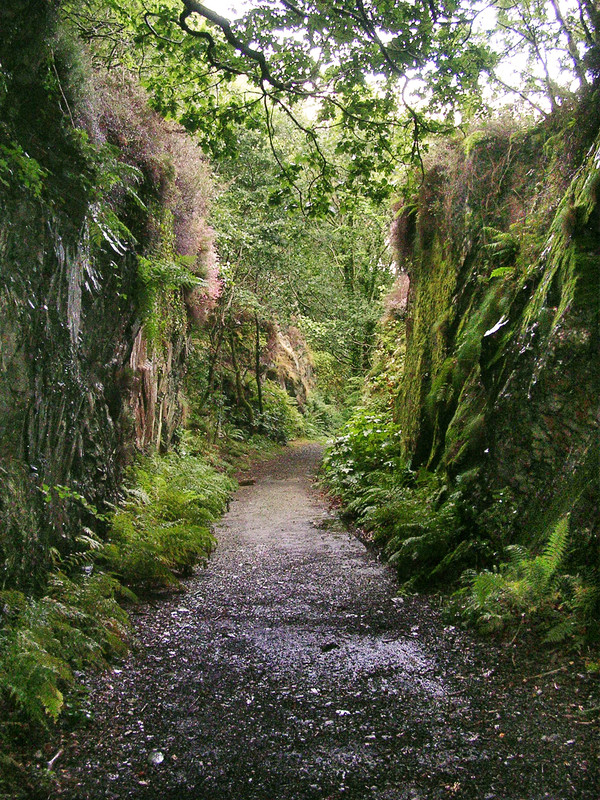
Ah. WHR trackbed in the cutting by Nantmor, September 2005.
Mark
Mark
That cutting illustrates my final point perfectly. Thank you Mark !
| Re: [OTD] 19th Feb (2011) - Welsh Highland reopens throughout Posted by Chris from Nailsea at 22:37, 19th February 2026 | |
... while the driver swung his stool right around to the outside of the locomotive into the cooler fresh air ...
Sorry: for a moment there, I misread that as, "his tool"

| Re: [OTD] 19th Feb (2011) - Welsh Highland reopens throughout Posted by Mark A at 22:17, 19th February 2026 | |
Ah. WHR trackbed in the cutting by Nantmor, September 2005.
Mark
| Re: [OTD] 19th Feb (2011) - Welsh Highland reopens throughout Posted by Oxonhutch at 21:53, 19th February 2026 | |
In my Southern African days many decades ago, I remember seeing these very same Garrett locomotives hauling trains, mainly goods, in the sub-tropical heat of Natal and the Eastern Cape. The poor old fireman was stuck sweating inside the cab feeding the fire and managing the boiler - while the driver swung his stool right around to the outside of the locomotive into the cooler fresh air, driving the engine through the open window in relative comfort - regulator, reverser and brake within easy reach.
Visiting the WHR, I pointed this out to the driver and the seat mechanism in the cab which had now been fixed in place. He was surprised to see, that without the Welsh modification, it could have indeed been swung completely out. In Wales, that would have been very unwise.
| Re: [OTD] 19th Feb (2011) - Welsh Highland reopens throughout Posted by johnneyw at 20:39, 19th February 2026 | |
Indeed, and even better, isn't the through journey around 40 miles rather than 25?
Mark
Mark
I presume you mean if you add on the 15 mile Ffestiniog railway stretch from Porthmadoc it comes to about 40 miles.
The WHR is truly world class. When we took it we were staying at Bedgelert campsite with our tents right next to the campsite station.... which somewhat minimised the risk of missing the train.
| Re: [OTD] 19th Feb (2011) - Welsh Highland reopens throughout Posted by Mark A at 18:39, 19th February 2026 | |
Indeed, and even better, isn't the through journey around 40 miles rather than 25?
Mark
| [OTD] 19th Feb (2011) - Welsh Highland reopens throughout Posted by grahame at 13:27, 19th February 2026 | |
From CymruRails
On this day, 19th February 2011, a long held dream became a reality as the first public passenger train operated the full length of the restored Welsh Highland Railway between Caernarfon and Porthmadog Harbour
This 25 mile journey takes passengers through some of the most dramatic scenery in Britain, including the village of Beddgelert and the spectacular Aberglaslyn Pass. While the restoration was a modern triumph, the railway's roots date back much further. The original WHR was formed in 1922, succeeding the horse drawn Croesor Tramway which had served the quarries since 1863. Unfortunately, the first era of the WHR was short lived, hampered by outdated, uncomfortable carriages and a reputation for being unreliable, the line closed in 1933. Today’s restored railway is a far cry from those early struggles, standing as a world-class heritage attraction and a testament to decades of hard work and vision.
This 25 mile journey takes passengers through some of the most dramatic scenery in Britain, including the village of Beddgelert and the spectacular Aberglaslyn Pass. While the restoration was a modern triumph, the railway's roots date back much further. The original WHR was formed in 1922, succeeding the horse drawn Croesor Tramway which had served the quarries since 1863. Unfortunately, the first era of the WHR was short lived, hampered by outdated, uncomfortable carriages and a reputation for being unreliable, the line closed in 1933. Today’s restored railway is a far cry from those early struggles, standing as a world-class heritage attraction and a testament to decades of hard work and vision.
